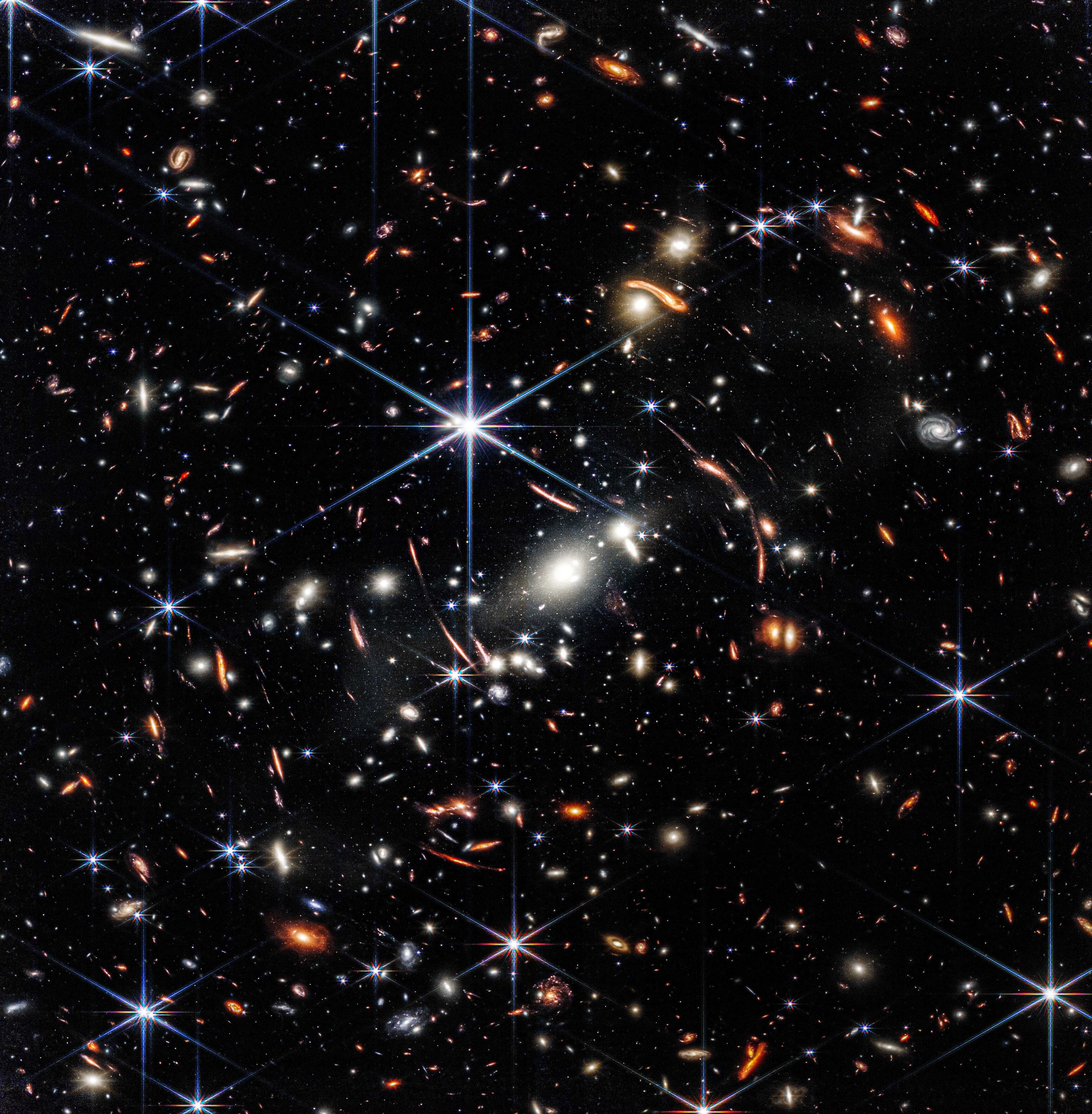
Like, we’re destroying the one place we know is a sure bet on where we can prosper if we keep it healthy, but instead the world’s richest man is trying to expand to other planets while this one’s ability to sustain life is in jeopardy. IMO that makes us potentially a very stupid species compared to a species that doesn’t really care about meeting other aliens because they value the life on their own planet far more than we do.
maybe the real treasures are the natural resources we destroy along the way!
Quite a few assumptions being made and quite a lot of hyperbole.
- The richest man in the world is not representative of the human race. Also, settling Mars (within timelines that musk is suggesting) is not treated seriously by any institution with significant power.
- We aren’t putting earth’s ability to host life in jeopardy. Not even close. Yes, human caused climate change is bad. Worst case outcomes lead to most human settlements going under water and extinctions in a manner that the planet has seen only a few times. But again, not even close where we need to abandon earth cuz we “ruined it” or whatever. Not even nuclear war would lead humanity to come to this conclusion.
As for why a civilization should be interested in spreading out as much as possible in case it wants to survive:
- spreading out reduces the probability of extinction. Right now, one gamma ray burst that’s close enough, and that is aimed at earth can render the entirety of humanity extinct. But if we were more spread out, not all humans would have to die. The same logic can be applied to relativistic weapons aimed at earth.
- spreading out gives us access to a lot of resources. Earth’s gravity and atmosphere makes it hard to manufacture and launch megastructures. Megastructures can allow us to create really cool stuff.
- many humans find exploring the universe really cool!
If alien species are anything like us, I highly doubt that they’d come to the conclusion that you’ve posited.
I can point to examples of many civilizational collapses based on comparatively minor climate abnormalities in the last mere 7,000 years, and can say with certainty the earth has gone at least 5,000,000,000 without being bombarded by even one gamma ray burst.
I think any alien civilization with basic math would prioritize the bird-in-hand.
Civilization collapsing doesn’t equal to species end. A gamma ray burst or yeah something that has already happened in the planets past, a big enough asteroid hitting us. Can mean the end of the species.
Of course civilizations collapse should be avoided even just for the reason of avoiding lots of people dying. We shouldn’t completely discard expanding into space either. Our population and civilization is big enough that both things can be done at the same time.
Working towards both will probably provide a better overall goal for common people as well instead of currently working just to line the pockets of CEOs and pedofiles.
At this point civilization collapse would effectively terrestrially lock us in. There aren’t enough easily accessible raw materials to reindustrialize to a space-faring point.
Yep.
If you burn through all the readily available energy resources, civilization collapses, then tries to rebuild itself…
It can’t. Their ancestors kicked over the ladder of progress, and broke it.
Attempt 2 at civilization now has to figure out another tech tree, because they cannot cost effectively lubricate an industrial economy and logistics with fossil fuel.
Not strictly impossible, per se, but they have an even more difficult task.
You can point to those civilizations because their collapse was not the end, life continued on. We haven’t been hit by a gamma ray burst or any other complex life ending disaster since we are here to discuss the scenario. But that’s no guarantee that we won’t be.
The odds of anything happening to render Earth totally uninhabitable are very small… in our lifetimes. But as long as we keep existing, the time frame will keep growing, the opportunities for disaster will keep accumulating and the odds will keep multiplying. The basic math looks very different when you multiply by infinity. Even the sun won’t last forever.
Obviously, this is no reason to neglect Earth and rush to other planets. But it is reason enough to reject the idea that we should never spread to other worlds because Earth will always be enough.
without being bombarded by even one gamma ray burst.
you wouldn’t know that. deep-sea life would probably survive any gamma ray burst, i guess.
and it turns out, there’s a surprising amount of deep-sea life: bacteria and complex life.

on this diagram, it would throw us back by 300 mio. years max.
Won’t ocean acidification kill a lot of that life? Isn’t it already?
Other positive things to mention about space exploration:
- If humanity spreads out across the stars, there is less of a danger for us dying from ANY centralized disaster including the cosmic ones and those we might cause ourselves
- Similar to the above, it will be harder to create centralized governments due to extreme distances and just communication limits set by the speed of light; ergo, if some colony falls prey to a dictatorship it is unlikely to spread easily across all of humanity
- We have lots of questions about the universe which may be answered if we travel it. And, when scientific discoveries are made they often have applications outside their initial field.
- We have lots of questions about biology that living in novel environments would teach us (also lots of other scientific fields too of course)
- Forming colonies will force many small groups of people to work collectively, causing those colonies to form a sense of community—something that is lacking in humanity presently
- Isolation caused by communication limits will be scary but also will decrease our access to 24/7 terrible non-local news (inhibiting our ability to doomscroll) which will likely have a positive impact on everyone’s mental health (…maybe not on earth but in the colonies at least)
- Exploration becoming a possibility will also likely make people happier just by showing that humanity has a future. Also, knowing that there are places you can go to escape society all together is quite a freeing thought for some
- Last but not least WE GET TO GO TO SPACE!
Yeah. You don’t wanna carry all your eggs in one basket.
Also, it’s human nature to explore. Show people a place they can’t go and they’re going to want to find a way to get there. It’s just what we do. We’re curious little monkeys.
Wish I had your optimism. I think the Earth is gonna shake humans off like a bad habit if we don’t stop climate change. Crop failure will kill everyone, not just poor people.
Ooh do you listen to John Michael Godier by any chance?
He’s as rich as he is because people agreed to give him money out of faith in what he claims he wants to achieve.
He’s one of the world’s most supported humans according to humanity’s most dominant merit system.
I refuse to believe that capitalism is the terminal emergent quality of life in the unuverse.
I refuse to believe as much for humanity.
“it’s easier to imagine the end of the world than the end of capitalism”
Well i was engaging in my community and accepting mutual benefit as compensation but i guess I’ll give up on that and go back to doomscrolling and jerking it in isolation to my grok gf. (she loves me)
engaging with your community is nice but it’s not going to save the world. often people’s engagement with their communities leads to negative social consequences, like the housing crisis. the housing crisis is a direct consequence of community engagement and folks seeking to control who can live near them.
Oh i see. So by sharing resources, knowledge, and keeping an eye out for them, and by receiving those benefits in return, I’m actually harming them. (I’m addicted to narcan)
that’s because capitalism is built into our nature. we are greedy little monkeys. most of us are motivated by the social need to feel like we are superior to other monkeys and easiest way to show that is to have more than they do.
people can daydream all the want that aren’t wired this way, but those are the same people who browbeat each other over the ‘true’ interpreation of marxism or whatever. their own version of monkey standing. and their ‘leaders’ are all grifting trust fund types .
Some are, and they have loud voices. We’re also helpful little monkeys who groom each other and take care of our sick and elderly. The quiet monkeys are a silent majority
Unfortunately, the greedy monkeys want our sick and elderly to die, so they can have their money.
Actually we’re hardwired for cooperation, as a hyper social animal. A single greedy human will out compete a social one, but a social group will out compete a greedy group.
The result of a zillion years of evolution in which the monkey that can gather more food and resources, also gathers followers, and gets laid more.
Fast forward a zillion years, and those fat greedy apes now control the world.
Now that we’re aware of the mechanism, all we need to do is spend the next zillion years forcing humanity down a different, more cooperative evolutionary path. That shouldn’t be any problem at all.
Sarcasm or?
A Great Filter needs to explain why we don’t hear radio transmissions from alien civilisations.
space big explains it pretty clearly tbh
Also dark forest theory
I think the only reason this theory exists is because it’s kinda spooky and fills us with dread.
If such a civilisation existed with the power, intention, and tech to zoom around killing off other species:
- how do other planets know they need to hide?
- why haven’t we been killed off yet ?
- what is the motivation of these civilisation-squashers?
- and finally… if everyone was hiding out avoiding making any radiowaves, the killers would have long since switched to looking for the conditions that support life, the same way we do.
I think it exists based on the behavior of creatures we’ve observed…
Does it?
The Fermi Paradox which proposes the great filter suggests that despite the vastness of space we should still be able to detect radio waves from other civilisations.
The question of the great filter would not be posed, if we were unlikely to detect other civilisations because of the expanse of space.
Inverse square law. We’re probavly bombarded by millions of alien signals. They’re just not very loud
Oh wow you’ve cracked it. To think there are great physicists like Frank Drake who have made this search their life’s work, and pondered this very question for decades, and you’ve deduced the solution with your astonishing intellect. Bravo.
It was a thought experiment meant to provoke discussion at the time, not a rigorous theorem. Check the
fccoefficient, there’s much debate about its value and definition of detectability.You’re aware Drake was one of the instigators of the SETI program right? He spent a significant portion of his life on a project that would have been pointless if you are correct.
You may have just upset every scientist in the room at the suggestion that people only expend time on money on science that will only produce positive results

At the relevant distances, it could be that sending a message that would arrive as anything that stands out above the background noise of the universe would probably require a mono-directional transmission directed at a specific target, which would require a lot of specific effort that a smart enough species may see as not worth the resources. Frankly, we’re smart enough to know there is alien life out there somewhere without needing to see it for ourselves, and until our planet is much healthier and our species less chaotic, what would be the point of trying to contact it?
What if it’s like us but worse?
And as others have mentioned, a smarter species would likely try to hide, maybe even trying to capture as much ambient RF leaving their planet as they can so we don’t find them by accident.
The “great filter” is simply basic physics and chemistry, the Periodic Table of the Elements, the fundamental forces and engineering limits.
We’re not going there, they’re not coming here.
I think the universe being the same wall to wall means life is probably very common, and will follow pretty much the same rules and limits as here. We’re not special, neither are they.
I continue to read sci-fi under the lens that it represents our racial (as in human race) tendency to fear the other and enjoying war and destruction despite screaming that we’ve evolved beyond that. We’re a bunch of tribal war-like destructive plains apes with computers and guns.
Star Trek isn’t real, there will be no warp drives, transporters, Dyson spheres, Ringworlds, Space Elevators, or even just a basic flush toilet on the Moon.
Forget it. Build something worth living for here cuz out there is a deadly radiation-blasted nothing with nothing in it.
Warp drive is still possible with our current understanding, Fusion is right around the corner (at least if we look at the entire human existence) and while most mega structures are fictional, a Dyson swarm is fairly easy to do and completely possible.
Humanity could still go very far till physics and chemistry are the real limiters, but human greed will wipe us out first.
Thanks for the laugh!
100% agree that we should focus on fixing down here, but very bold of you to assume Fermi, Konopinski, Teller and York, as well as all of the other minds who’ve wrestled with this question have all overlooked basic physics, chemistry and engineering.
Yes, they must have. Space Nuttery is a religion for nerds. There is no future in space. The end.
Username does NOT check out
Did space hurt you, somehow?
deleted by creator
Because the galaxy is fucking huge and signals attenuate
deleted by creator
The galaxy isn’t a vacuum it has tons of shit and lots of background radiation.
I agree with you, but you fail to account for the absolutely insane people on earth who do dangerous and unpleasant things out of sheer boredom.
Maybe you and I won’t go to space, but Stockton Rush’s reincarnation will be living on mars in a fiberglass dome covered in their own shit. Given we make it past the global warming filter first.
Maybe. But this would still only filter some.
The great filter to me is a vast mix of filters. Some never leave their planets because they are oceanic only and forever, some because the gravity is too high to ever escape, some because they die out, others due to no genetic intrinsic motivation to expand at all, etc. There can by myriad possible filters all applying at the same time
The rare earth theory is the most boring but most likely explanation. Though it shouldn’t be as it’s kinda nice to be given a rare and unique opportunity, we shouldn’t squander it.
The latest estimates put habitable planets around one in five stars
Yes but once you compound other variables probability turns out actually quite low overall especially since we discover more and more civilization ending dangers as we probe. However I also feel like we ignore civilization accelerating shortcuts we have not found as well. So with n sample of 1 it’s really hard to make your mind on rare earth.
I agree it’s impossible to be sure with a sample of one. But I think “we’re not special” is a good assumption to make, and it leads to some interesting possibilities.
The issue isn’t just flying saucers not landing in downtown Manhattan, the problem is the universe has been silent so far for us. A universal tendency towards planetary protection doesn’t explain why we don’t see a cosmos awash in artificial electromagnetic signals. Everything we find seems to have a natural explanation. If life really was as common as it should be, we would see it broadcasting out into the dark like we are. The universe is old, big and filled with the stuff life needs. Life SHOULD exist, the fact that we haven’t found any real evidence of it yet is bizarre. Some fundamental part of how we understand the universe is wrong.
That just indicates nobody is beaming an uncompressed signal directly at use. Something not on a tight beam directed at us would disperse and get lost in the noise. A compressed data stream would be indistinguishable from noise if since we don’t know the compression algorithm and with any kind of interference at all there wouldn’t be any way to distinguish it from noise.
Getting a radio signal basically requires there to be an alien race that knows we’re here and wants to talk to us.
Yupp could be a whole species of beings out there with their own space programs trying to send and recievesignals but they’re left in the dark just like us, forever out of reach and drifting further from each other.
We may be receiving weak signals all the time that come across as noise, but receiving a message is a different story with specific motivations and efforts behind it.
The universe is old
Actually it’s very young, like a baby young compared to what it could be
Life SHOULD exist
That’s a very bold statement without any evidence to it
the fact that we haven’t found any real evidence of it yet is bizarre
You could call it bizarre if you had some data where there should be a lot of evidence. We don’t have that data, just fantasies.
Some fundamental part of how we understand the universe is wrong.
Likely most of it. Or even our “understanding” as a concept is not there yet. I mean our “understanding” was meant to find food, prey, etc. And we were pretty bad at that.
Nah. They invent generative AI and their civilizational progress stalls forever.
They (we) become Wall-E human style characters.
And I guess the AI never actually becomes advanced enough to explore the cosmos itself? Otherwise that would be the alien life we run into, right?
So they get addicted to AI, but it’s only marginally better than our shit AI. lmao great.
Well, GenAI cannot invent anything. Has no agency. So it’s stagnation until the sun becomes a red giant
Or, perhaps, the “Great Filter” is just a question of “Can a species come together, or will greed of a person outweigh life of people?”
The ones who hoard all the resources destroy everything for everyone else.
Seems very plausible if other life is like our own.
If all it takes for a species to never leave their planet, is just a few bad eggs, then that would be a defining great filter. All life eventually develops idea of altruism (helping others without anything in return) but that makes egoism even more beneficial strategy, because egoistic individual will have much more resources and higher chance of survival than altruistic one.
Seems plausible.
we know is a sure bet on where we can prosper if we keep it healthy,
haha dude, error #1. we can do everything right and still be toast if all our eggs are in this one fucking basket. the universe is a big place and the earth is a very small, vulnerable one.
No truly cataclysmic events occurred in the last millions of years, so we’re probably safe enough.
Fucking up the planet in an anthropogenic way is clearly a bigger concern, and launching giant stuff into space contributes to that.
In other words, maybe later it could be worth it, but only if we solve the problems right here. Otherwise, we won’t make it there, either.
No truly cataclysmic events occurred in the last millions of years, so we’re probably safe enough.
Just because nothing happened so far, doesn’t mean nothing will happen in the future. Just look at some of the volcanoes we have around. They may lay dormant for millennia, until they don’t. Same principle for pretty much everything this universe has to offer. It’s safe until it suddenly isn’t.
Also, we have several billion people on this planet. I think we can handle tackling multiple problems at once.
With our current understanding, the universe is a vulnerable place. Heat death of the universe may be a thing that’s inescapable.
may or may not be. i’ve had long discussions about that with people. i struggle to get a clear answer from people. everybody gives evasive answers.
Evasive answers like “we really can’t know what will happen in billions of years”? xD
no, more like a general unwillingness to properly discuss this. like, even if we could know it, we wouldn’t be talking about it because people just don’t care.
good ending
That would solve the Fermi paradox too. Smart species stayed on their home planet, dumb ones tried to leave it. While trying, they ruined their best chance of survival. While in space, they found out that survival out there is nearly impossible without a planet. That’s why we don’t hear from them.
“We need to spread to the stars to ensure the survival of our species.”
Why? Why does our species need to survive? Why would anyone care about that? I don’t think anyone really does. People just want to do cool stuff, as entertainment. To alleviate boredom. That’s it.
No one reading this will “go to the stars”. It’s unlikely more than a handful will visit Mars in your lifetime. Why anyone would want to go to Mars is beyond me, it’s extremely inhospitable to humans. There’s nothing there.
We thought, after going to the moon we’d continue on in that vain, and have space hotels by 2001. It didn’t happen, don’t think anything will be different this time.
Stop thinking we can trash this planet, “but it’s okay because we’ll find a different one.” That’s not going to happen. It’s far, far more likely we’re going to kill ourselves off long before we can get anywhere close to doing that. That’s the reality.
I agree with most points except not wanting the human race to survive.
I very much want the human race to survive but to do it in a way that isn’t destructive to our planet. Which IS possible.
I think the great filter is more likely a hyper individualistic mindset that creates a “well I lived so why do I care if other lives after me?” Mindset.
You’re line of thinking mixed with access to nuclear weapons destroys us all. And that’s very likely what will end up happening.
We should all want humans to survive as long as possible BUT be working towards a way that we can do that without being destructive.
Ultimately though yes the end is certain as they say. Heat death of universe and all that (if that’s even what happens, no physicist I know of has been consciously there when its happened and able to report back)
But yes. All life animals, plants, humans and otherwise should be kept alive it really is our duty as intelligent beings to facilitate that.
I get the hype about traveling to and living on Mars/Luna/Space Stations, I think. It’s that most people are not dedicated to understanding it, they just see cool scifi/scifantasy settings. Star Trek finding neat planets everywhere and some hot women, Star Wars being full of cooperative lifeforms and beautiful high tech worlds, Guardians of the Galaxy slinging through another rainbow nebula with a killer Playlist, and Stargate bringing us to beautiful British Columbian pine forests every week. Even stellar dramas and tragedies all follow the one successful main character(s) that survives, thrives, and entertains us even in the worst of situations. Interstellar, The Martian, Ad Astra, Mission to Mars, The Red Planet, Space Cowboys, Total Recall, Project Hail Mary, and Gravity come to mind.
The key thing, to me, is that all of this feels like someone else already made the situation survivable and the person can always return home. Mars is “right there” in solar system terms. And so often, even when a dire earthly situation is what triggered the movie events in the first place, they tend to be solved by time the protagonist returns. There’s no ultimate feeling of loss. It all works out. And I think that’s the extent of thought by the gen pop when it comes to space travel. It’s survivable and earth is always fixable, because SomeoneElse^TM made it work.
I play a game called Elite: Dangerous. I’m currently 20,000 lightyears from home. It’s lonely and empty. For reference, I could make it to a large colony (Colonia, for the 3 ED players) in about 2 hours of game play and make it back to Earth in probably 8. But I don’t do that because I want to scan and search each system I jump to, looking for valuable plant life and valuable planets to scan. 90% of the time there’s nothing of value. Thats a lot of time looking into an empty bag. And even when I do find something, it’s often a long flight to the POI. I generally enjoy it for being a calm game out “in the black”, but I absolutely get space madness like Tommy Lee Jones’ character in Ad Astra. I keep looking and keep finding nothing. The irony there being one of the movie’s “extrasolar planets” was just a normal picture of enceladus, a local moon. The game has many planets that look similar. Nothing! Nothing here! Nothing there!
We are not representative of the common understanding of stellar travel. It looks cool, but you and I know nothing about it will be cool from a living experience. All that’s cool is knowing the first people out will provide a ton of feedback to improve the next trip. The next trip, performed by someone else, as the trips will be one-way death sentences for quite some time to come.
We should die out on this planet.
There is a handful of people with the money to get to Mars who can go die somewhere else
This seems backwards to me, since the latest variant of what we call Humans is the only species on this planet, that - to the best of my knowledge - ever attempted (a) leaving it and (b) destroying their own habitable climate (along with that of a large portion of all other species) on the planet.
in my humble opinion (a) Is the marvel of international science collaboration, probably one of the highest achievements of this species, (b) on the other hand is fueled by greed and incompetence in equal quantities and according to Hanlons razor, we shouldn’t equate this to malice, even though it comes very easily to members of our species.
a) is true, but b) is not true. There have been mass extinction events in the past that have been caused by a new species evolving. Things got pretty crazy when tree bark came onto the scene. Or maybe the opposite of crazy because a lot of things died off.
Say hello to my little friend, the bacteria! And a loooong line of his cousins, reaching the rabbits and beyond.
Yeah, at least normally resources are depleted by the number of organisms, not the greed of a few examples, but this is not a new thing.