

15·
6 days agoThe drawback to spaces is that people with vision issues or dyslexia lose the ability to make the code more readable in their IDE by adjusting tab size.
I’m just a person who does mycology for fun
The drawback to spaces is that people with vision issues or dyslexia lose the ability to make the code more readable in their IDE by adjusting tab size.

I wanted to get started without having to learn a bunch of Linux networking and docker stuff so I used this pre-built mediastack compose file.
Then I spent weeks fixing all the problems with it, upgrading the outdated packages that they pinned, sorting through the outdated/incomplete setup docs, and disabling the apps I don’t need (so many monitoring dashboards without config instructions). Now I know a bunch of Linux networking and docker stuff.
I’d still recommend mediastack as a reference just because it’s a good example of how to set up secure internet access (the diagrams of the network architecture are great) but their “full download vpn” config is overkill (most of this stuff doesn’t really need to be accessible from the Internet in the first place) and even their “mini download vpn” unnecessarily puts the Usenet download client (SABnzbd) in a VPN.
I’ve seen a few folks mention trash guides, while they’re great, their quality settings weren’t written for current hard drive prices so you might want to skip the part where you crank up all your preferred bitrates to the maximum.
One thing I added which is haven’t seen mentioned yet is Tunarr to create live tv channels for shows I like to have on in the background. It’s great when it works but it’s in active development so I frequently have issues with it. Thankfully the devs are responsive and helpful.

But what’s supposed to make a potential customer excited about that? Looking at your page, all I see is what you call labels, extensions to your email address separated by a “-” which seem identical to the “+” addressing supported by most big email services except that you automatically set up rules to bounce emails sent to the home label instead of the user needing to manually set that up.
Maybe this works some clever way under the hood but nothing on your site really tells me why I should be interested or excited about it. Every email provider advertises that they have some “unique” solution to spam and most of these work well enough for most people so you need more than just that to have a good selling proposition when you’re not priced competitively.
Fair use requires you to analyze or comment on the work or transform the original work in some way, non-commercial use isn’t enough on its own.
The real reason it’s “ok” is that it’s unlikely the owner would be able to prove damages from someone using their image as an avatar so it’s not worth taking anyone to court over it because all they would get is the judge ordering them to stop and a C&D is cheaper if the owner really cares about stopping you.
Mycology is full of them which are mostly the result of genetic sequencing and the good old “where do you draw the line between species” question but a recent and high visibility one is the Collybia shift.
Before genetic testing, Collybia was a genus characterized by smallish pale-spored mushrooms with convex caps, no ring, and gills which are broadly attached to the stem (the simplest shape the average person would imagine for a mushroom), this became one of the classic “statures” of mushrooms “Collybioid”. As we sequenced Collybia species, they were slowly moved into other Collybioid genera like Collybiopsis and Gymnopus. Eventually this resulted in most of the Collybioid mushrooms being moved out of Collybia, leaving only the earliest-discovered mushrooms in the genus which were tiny parasitic mushrooms that weren’t really Collybioid at all.
Here’s an average “Collybioid” mushroom Gymnopus sp.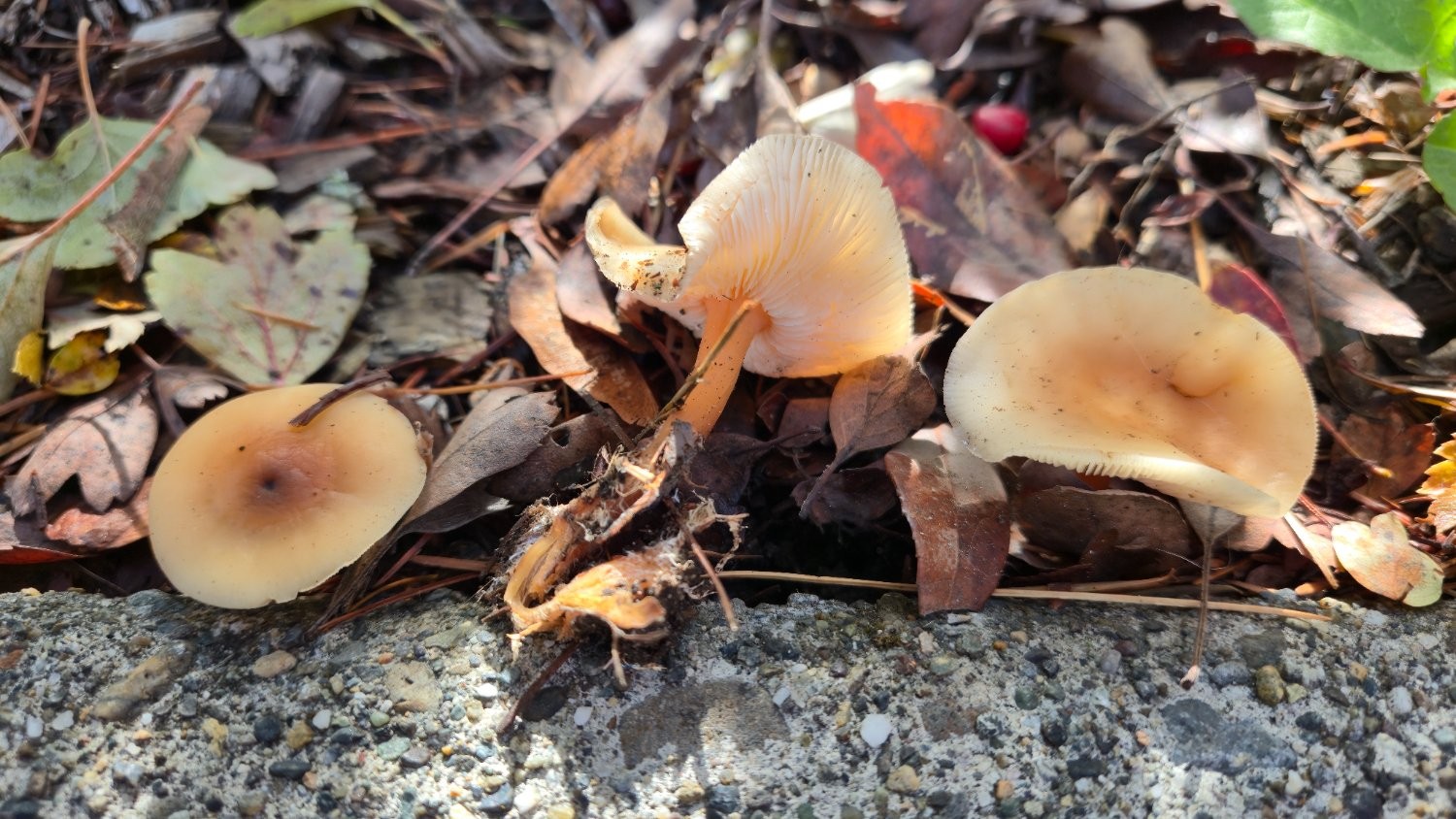
Then things got worse, a recent paper did a study on genus Clitocybe which is another genus which has a classic stature named after it, “Clitocyboid” which refers to smallish pale-spored, funnel-shaped, mushrooms with gills that run down the stem. This paper discovered that nearly everything we had been calling “Clitocybe” actually belonged in Collybia meaning that most mushrooms in Collybia are now Clitocyboid instead of Collybioid. This has resulted utter chaos which has some mycologists considering invoking the “common usage” rules in taxonomy to put the new Collybias back into Clitocybe to make things less confusing. This chaos has been compounded by the fact that iNaturalist has already accepted this name change, but only for the mushrooms explicitly studied in the paper and not their known relatives which has resulted in the Blewits being split between Collybia and Lepista (which itself was a recent name change from Clitocybe that everyone was still adjusting too).
Average nondescript Clitocyboid (no ID because these are nearly impossible):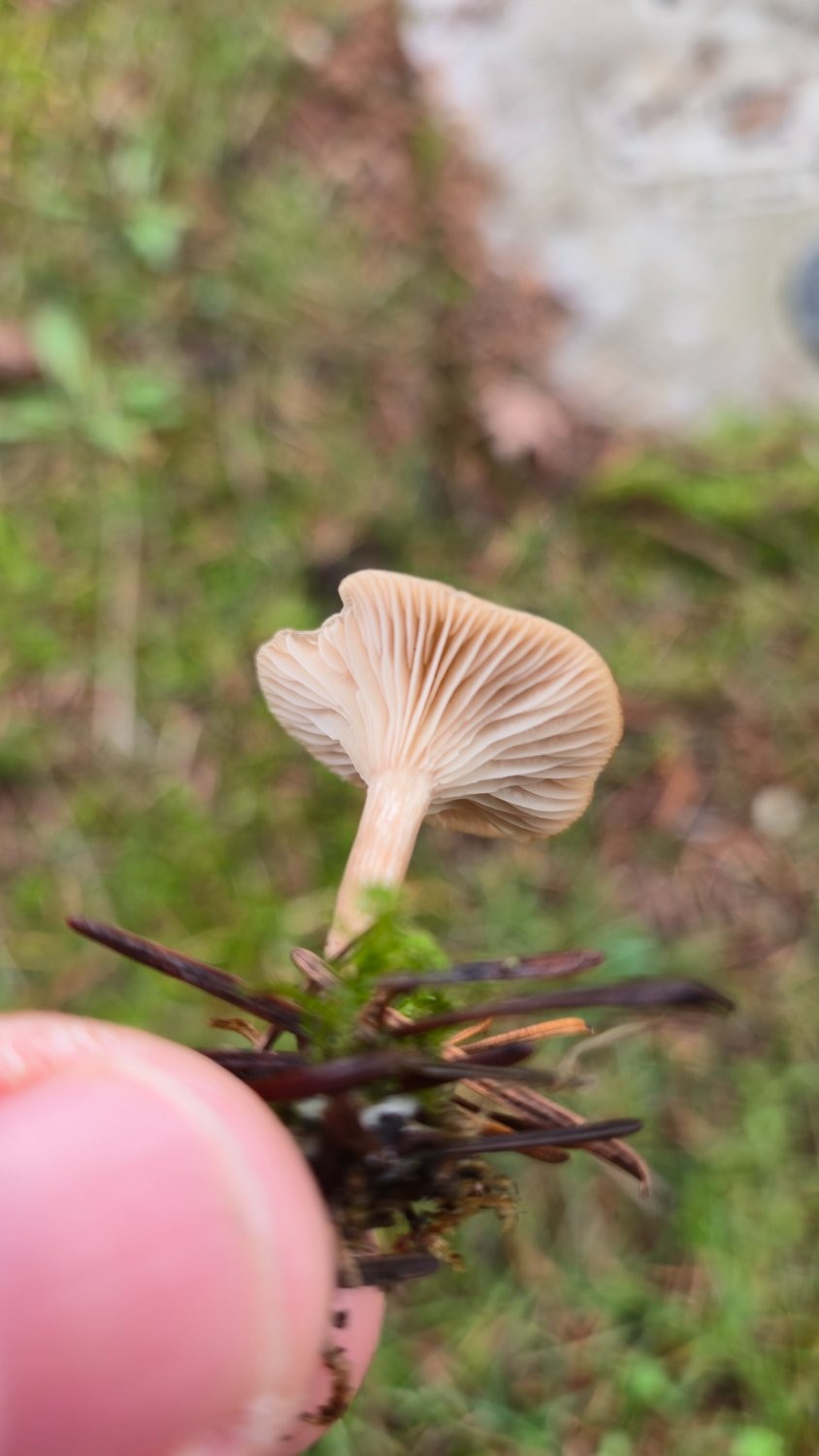
A Blewit, AKA Clitocybe/Lepista/Collybia nuda: