

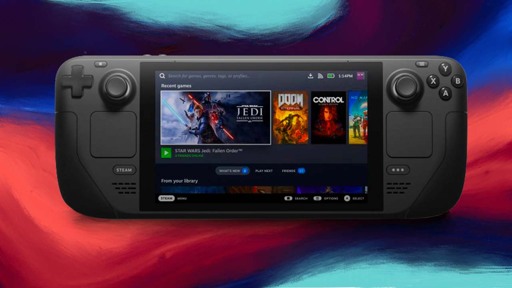
Valve recently raised the price on the Steam Deck, making the handheld gaming PC cost up to $949 for the 1TB OLED model. While that’s a massive $300 increase over its original price, the Steam Deck is once again sold out.
Valve recently raised the price on the Steam Deck, making the handheld gaming PC cost up to $949 for the 1TB OLED model. While that’s a massive $300 increase over its original price, the Steam Deck is once again sold out.
As we have seen, they won’t and never will. This is arguing for gravity to stop pulling so hard.
The mechanism to fix the problem you’re describing has broken long ago and everyone stopped trying to fix it. Your money needs more choices of where to be spent, then businesses will force each other to price things reasonably. If anyone can name all the companies that make a type of product, then that is not enough companies.
I posit it’s a consumer culture issue.
Look at Temo, Tiktok, Amazon, YouTube; people are bombarded with “buy this on impulse!” every day, 24/7, through notifications. They’re urged to buy high by dozens of influencers they’re bombarded with.
So they do.
And now that’s the culture. Competition isn’t going to fix that, and doesn’t naturally arise in that kind of environment anyway.
I think that’s true. I think that stems from the fact that a large percentage of global consumption is American in origin, and since at least the Industrial Revolution, that country’s culture has been led around by the nose by business magnates to the point that our national culture has remained relatively shallow compared to other nations and is largely centered around buying things, as you point out.
It got so shallow, though.
A long time ago, homesteading was the American dream. “Buy your own property, buy stuff for it, build your own life,” and that ethos extended to industrialization, post WWII (with the suburban boom), and even the 80s/90s.
I feel like that slowly broke with the rise of social media.
The “American urge” went from home/lifebuilding to encouraging short term, FOMO thinking. “Who cares about the future, look at this beatuful person, they’re using this thing and you need it NOW!” is what basically all modern ads say. Though there are some oldschool holdouts like Berkshire Hathaway, most big buisnesses seem to have adopted that mindset for their own decisions, too.
I do believe social media may be the latest, most distilled form of industry directing culture, in this case, hollowing it out like you said.
As we as a species began to study and better understand human thought, weaknesses or “bugs in the software” were discovered. That knowledge was then weaponized to wage psychological warfare on society at large. They learned that if you can persuade someone to fear something, you can then leverage that fear to make people think with their amygdala instead of their prefrontal cortex, making us behave more like predictable animals that can be conditioned to do things that are not in our interest because we are afraid something bad will happen to us if we don’t.
Logically, even a child could see the ploy, but they got us using an older, simpler part of our brains that does not enjoy the benefit of logical, critical thinking.
I think that marketing and advertising has leaned on this for generations, but the difference now is that they have teams of psychologists on staff to maximize the manipulation. They learned that it is more affective to “hack” minds so they feel they need a product or service, rather than trying to persuade them to want it. In that environment of fear, more advanced human pursuits like cultural and social interaction are diminished. I am less inclined to form a community with my neighbors and countrymen if I’m afraid or jealous of them.
I think that this is the primary mechanism that stunted American culture and continues at a rocket propelled pace today. As you aptly pointed out, what passes for culture here is a collective concern about how we’re doing in life compared to everyone else, based on who’s got the most best stuff or biggest army of followers or rarest collection of Funko Pops.
The thing is… I’m lucky enough to be able to afford all of this. In part, because I avoid terrible-value purchases. When the price of something goes up 40 to 400% percent, I say to myself, “Wow, it’d be really stupid to buy that thing RIGHT NOW.”
Too many people apparently lack that critical judgment, and just have FOMO in its place.
Yep, you can’t fix stupid.