This makes me wonder what is better - underwater DCs heating the oceans, or above water ones with all the pollution creating and water sucking cooling instead. Part of me thinks the underwater one might be better.
The issue with climate change was never with “heat production”. It’s always been the generation of heat trapping chemicals. The sun sends a stupid amount of energy our way. Generally the earth radiates almost the same amount back out into space, with a minor amount captured by various things, like photosynthesis.
Pollution alters that equation and causes more energy from the sun to get trapped in the atmosphere. That’s the problem. We could never generate as much energy as the sun (even the tiny amount that hits the earth), but we can definitely alter the atmosphere to trap more and more of that heat.
Also, the ocean is a MASSIVE heat sink. I saw someone work out the calculations recently, I don’t remember the numbers, but the conclusion was that we’d never measure a notable increase in ocean temps if we housed every datacentre in existence in the ocean. The sun hitting the ocean every day dumps more energy into the ocean directly than we’d ever be able to manage.
If you take local temperatures of the ocean at different latitudes, they won’t all be the mean temperature of the ocean. It isn’t a single massive heat sink.
But that’s true no matter where you put the data center. If you have to dump the waste heat somewhere, the high density and specific heat of water is a better heatsink than the air around us.
That’s true, but water is so much more effective at absorbing heat than air, the effect will be negligible. It takes about 4.2 megajoules to raise one cubic meter of water 1 degree C. That energy would raise over 3 cubic KILOMETERS of air 1 degree C.
Even putting data centers at the bottom of large lakes would be unlikely to have an effect. It will not be percetable in the ocean. Regarding temperature anyway, other factors are worth considering.
This is slightly off topic but when our local NPP was operational the lake that they used as heatsink would never freeze over even in the coldest winters. Of course it’s not a huge lake.
This page says the ocean is about 352,670,000,000,000,000,000 gallons, which is about 1.3 x 10^21 liters, and each liter is a kg of water (yeah, yeah, the dissolved salt adds some mass but I don’t think it adds sufficient thermal mass to make a difference). It takes 4.184 kilojoules to raise 1kg of liquid water 1°C, and 1 joule is 2.778 x 10^-4 wh.
So that’s 1.55 x 10^18 watt hours, or 1,550,000 TWh.
Global electricity consumption is about 30,000 TWh per year, so if you use the entire world’s electricity consumption for 51 years you’d raise the oceans’ temperature by 1°C.
Or if you take global data center power capacity of about 125 GW, and ran them at full power 24/7, you’d be producing about 10.8 TWh per day or 3944 TWh per year. It’d take about 393 years of the world’s data centers to raise the ocean by 1°C.
Just goes to show that much more of the energy heating up our world and our oceans is coming from the sun heating up the planet and the planet failing to radiate it out past our greenhouse blanket, not from the actual heating of our atmosphere from our own energy sources.
Parts of the ocean are colder and several species are having issues locating new spawning grounds.
I remember hearing of a corodile species or something that recovered due to a new power plant discharging warm water.
Overall ocean temps rising is a problem, but the real problem is becoming more uniform temps.
Cold spots are getting warmer. But warm spots are getting colder too. And especially for fish and reptiles. They need warm spots to spawn.
Ecologically speaking this is likely to be a good thing and within a couple years this could be a very important habitat that people are talking about and acting shocked about.


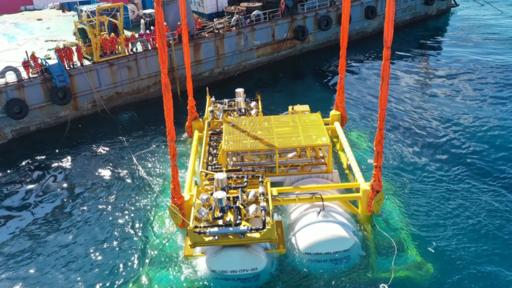
Let’s boil the ocean everyone.
How long until someone has the idea to put them near already-melting glaciers
We… We’re already doing that.
Sorry. :/
I didn’t know you’d find out this way.
But now we’re doing it more efficiently!
This makes me wonder what is better - underwater DCs heating the oceans, or above water ones with all the pollution creating and water sucking cooling instead. Part of me thinks the underwater one might be better.
The issue with climate change was never with “heat production”. It’s always been the generation of heat trapping chemicals. The sun sends a stupid amount of energy our way. Generally the earth radiates almost the same amount back out into space, with a minor amount captured by various things, like photosynthesis.
Pollution alters that equation and causes more energy from the sun to get trapped in the atmosphere. That’s the problem. We could never generate as much energy as the sun (even the tiny amount that hits the earth), but we can definitely alter the atmosphere to trap more and more of that heat.
Also, the ocean is a MASSIVE heat sink. I saw someone work out the calculations recently, I don’t remember the numbers, but the conclusion was that we’d never measure a notable increase in ocean temps if we housed every datacentre in existence in the ocean. The sun hitting the ocean every day dumps more energy into the ocean directly than we’d ever be able to manage.
It all comes down to pollution.
If you take local temperatures of the ocean at different latitudes, they won’t all be the mean temperature of the ocean. It isn’t a single massive heat sink.
Data centers raise nearby temperatures by up to 4 degrees in Phoenix
But that’s true no matter where you put the data center. If you have to dump the waste heat somewhere, the high density and specific heat of water is a better heatsink than the air around us.
I don’t believe they meant it that way. At that scale, literally nothing will be a uniform temperature.
That’s true, but water is so much more effective at absorbing heat than air, the effect will be negligible. It takes about 4.2 megajoules to raise one cubic meter of water 1 degree C. That energy would raise over 3 cubic KILOMETERS of air 1 degree C.
Even putting data centers at the bottom of large lakes would be unlikely to have an effect. It will not be percetable in the ocean. Regarding temperature anyway, other factors are worth considering.
This is slightly off topic but when our local NPP was operational the lake that they used as heatsink would never freeze over even in the coldest winters. Of course it’s not a huge lake.
Instead of drilling into the core we’re just going to get boiled alive. Pretty poetic for a garbage system like capalitism.
But … It’s China. It’s not jst capitalism, it’s human greed and fear.
Sure, not like US or Europe.
It’s just capitalism.
The only difference is that their capitalism is controlled by the state instead of an international oligarchy of billionaires.
I wonder how many sq km of data centers it would take to increase the temp of the ocean by 1 degree.
This page says the ocean is about 352,670,000,000,000,000,000 gallons, which is about 1.3 x 10^21 liters, and each liter is a kg of water (yeah, yeah, the dissolved salt adds some mass but I don’t think it adds sufficient thermal mass to make a difference). It takes 4.184 kilojoules to raise 1kg of liquid water 1°C, and 1 joule is 2.778 x 10^-4 wh.
So that’s 1.55 x 10^18 watt hours, or 1,550,000 TWh.
Global electricity consumption is about 30,000 TWh per year, so if you use the entire world’s electricity consumption for 51 years you’d raise the oceans’ temperature by 1°C.
Or if you take global data center power capacity of about 125 GW, and ran them at full power 24/7, you’d be producing about 10.8 TWh per day or 3944 TWh per year. It’d take about 393 years of the world’s data centers to raise the ocean by 1°C.
Just goes to show that much more of the energy heating up our world and our oceans is coming from the sun heating up the planet and the planet failing to radiate it out past our greenhouse blanket, not from the actual heating of our atmosphere from our own energy sources.
So if data centers continue to be built then we’re pretty much lining up another climate apocalypse behind the one we’re currently in.
This really is some great filter shit.
Parts of the ocean are colder and several species are having issues locating new spawning grounds.
I remember hearing of a corodile species or something that recovered due to a new power plant discharging warm water.
Overall ocean temps rising is a problem, but the real problem is becoming more uniform temps.
Cold spots are getting warmer. But warm spots are getting colder too. And especially for fish and reptiles. They need warm spots to spawn.
Ecologically speaking this is likely to be a good thing and within a couple years this could be a very important habitat that people are talking about and acting shocked about.
Even tho logically it’s obvious