I mean… We will learn to make our rigs last, do more with less, and carry on optimizing Linux builds.
Anything you can run today, you’ll be able to run tomorrow. And there is enough backlog to keep us all busy until at least 2028… Be honest with yourself lol
I mean, a PC from year 1999 is in the realm of possible for plenty of more localized production chains than needed to have that monster with Ryzen in the name.
And it’s not unreasonable to expect such a scattering of production. It happened with plenty of technologies. Also it’s not unreasonable to expect a return from more sophisticated and powerful material culture to one less so at both, but more accessible.
That’s what happened with automobiles a few times in history, that’s what happened with construction technologies and money many times in history, with food, with warfare.
That semiconductors are something challenging in complexity to produce - that actually makes such scattering more probable.
It’s not much different from chinaware or late medieval metallurgy needed for firearms. Strategic technologies are hard to achieve and it’s simpler to purchase their output, but eventually everyone realizes they need their own.
So I really hope that instead of the same not really diverse ecosystem of Intel, AMD and ARM powerful hardware we’ll have a thousand different local manufacturers of partially compatible hardware far weaker, like Amiga 1200, but more interesting.
Perhaps this will also be similar to the transition from late Rome to early Middle Ages.
It just makes sense historically. More distributed production environment can support smaller efficiency, - can’t make and sell on the same scale, - but there will be constant pressure to have it.
Of course, in reality this is all alarmism for no reason. There will be a bubble burst, suppose, - well, then there’ll be plenty of cheap hardware thrown out. The RAM manufacturers will have hard times, but it’ll balance out eventually. Just how it did after the dotcom bubble, not in the best way, perhaps with only a few manufacturers remaining, but it will. Or if there will be no bubble burst, suppose all that computing power founds an application with non-speculative value, - well, there’s still long way to go before your typical PC usage starts requiring really expensive amounts of RAM. If we drop the Web, even with modern Linux or FreeBSD one could survive on 2GB RAM and Intel C2D in year 2019. Then on 4GB, almost comfortable, even playing some games.
One good thing I’m seeing - those RAM prices can eventually kill the Web. It’s the most RAM-hungry part of our needs for no good reason. Perhaps Gemini is not what can replace it, it’s too basic, but I can see it becoming in corporate interest to support a leaner non-compatible replacement for the same niche. And corporate interest kills.
Or perhaps they’ll like some sort of semantic web gone wrong way - with some kind of “web” intended for AI agents, not humans, with humans having a chat prompt.


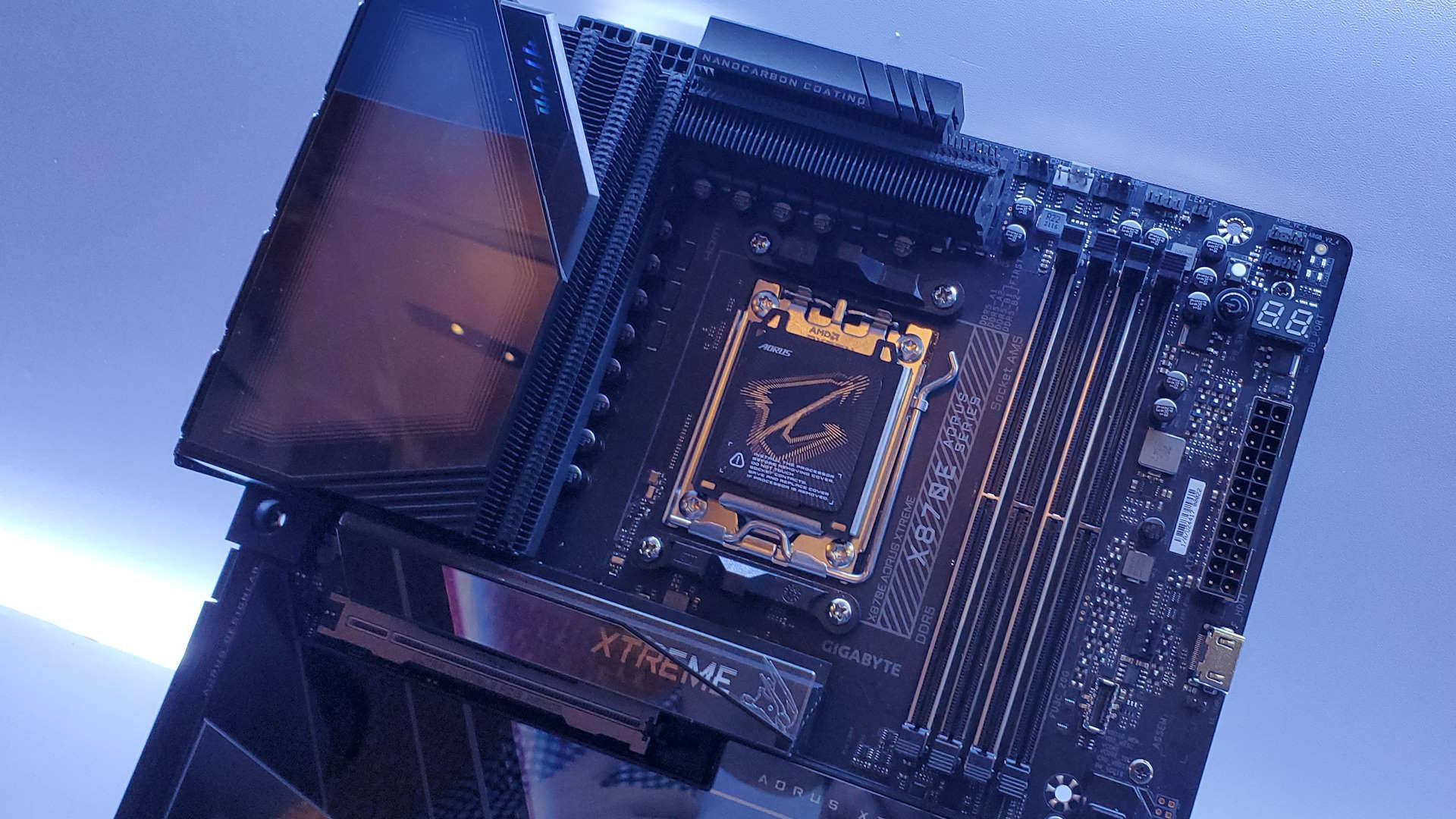
Yep. Being able to own a PC was nice while it lasted.
I mean… We will learn to make our rigs last, do more with less, and carry on optimizing Linux builds. Anything you can run today, you’ll be able to run tomorrow. And there is enough backlog to keep us all busy until at least 2028… Be honest with yourself lol
I mean, a PC from year 1999 is in the realm of possible for plenty of more localized production chains than needed to have that monster with Ryzen in the name.
And it’s not unreasonable to expect such a scattering of production. It happened with plenty of technologies. Also it’s not unreasonable to expect a return from more sophisticated and powerful material culture to one less so at both, but more accessible.
That’s what happened with automobiles a few times in history, that’s what happened with construction technologies and money many times in history, with food, with warfare.
That semiconductors are something challenging in complexity to produce - that actually makes such scattering more probable.
It’s not much different from chinaware or late medieval metallurgy needed for firearms. Strategic technologies are hard to achieve and it’s simpler to purchase their output, but eventually everyone realizes they need their own.
So I really hope that instead of the same not really diverse ecosystem of Intel, AMD and ARM powerful hardware we’ll have a thousand different local manufacturers of partially compatible hardware far weaker, like Amiga 1200, but more interesting.
Perhaps this will also be similar to the transition from late Rome to early Middle Ages.
It just makes sense historically. More distributed production environment can support smaller efficiency, - can’t make and sell on the same scale, - but there will be constant pressure to have it.
Of course, in reality this is all alarmism for no reason. There will be a bubble burst, suppose, - well, then there’ll be plenty of cheap hardware thrown out. The RAM manufacturers will have hard times, but it’ll balance out eventually. Just how it did after the dotcom bubble, not in the best way, perhaps with only a few manufacturers remaining, but it will. Or if there will be no bubble burst, suppose all that computing power founds an application with non-speculative value, - well, there’s still long way to go before your typical PC usage starts requiring really expensive amounts of RAM. If we drop the Web, even with modern Linux or FreeBSD one could survive on 2GB RAM and Intel C2D in year 2019. Then on 4GB, almost comfortable, even playing some games.
One good thing I’m seeing - those RAM prices can eventually kill the Web. It’s the most RAM-hungry part of our needs for no good reason. Perhaps Gemini is not what can replace it, it’s too basic, but I can see it becoming in corporate interest to support a leaner non-compatible replacement for the same niche. And corporate interest kills.
Or perhaps they’ll like some sort of semantic web gone wrong way - with some kind of “web” intended for AI agents, not humans, with humans having a chat prompt.
ELKS linux runs on 128 Kb RAM on ROM-based systems.